
Who keeps the interest on the world's digital dollars
There are $296 billion of dollar stablecoins. The reserves behind them earn about $11 billion a year. The people holding the coins earn nothing.

Put $10,000 in USDT or USDC and leave it for a year. You'll have $10,000. Put the same $10,000 in a 3-month US Treasury bill and you'd have about $10,405. The stablecoin is backed by those same bills. Someone earns the $405. It isn't the holder.
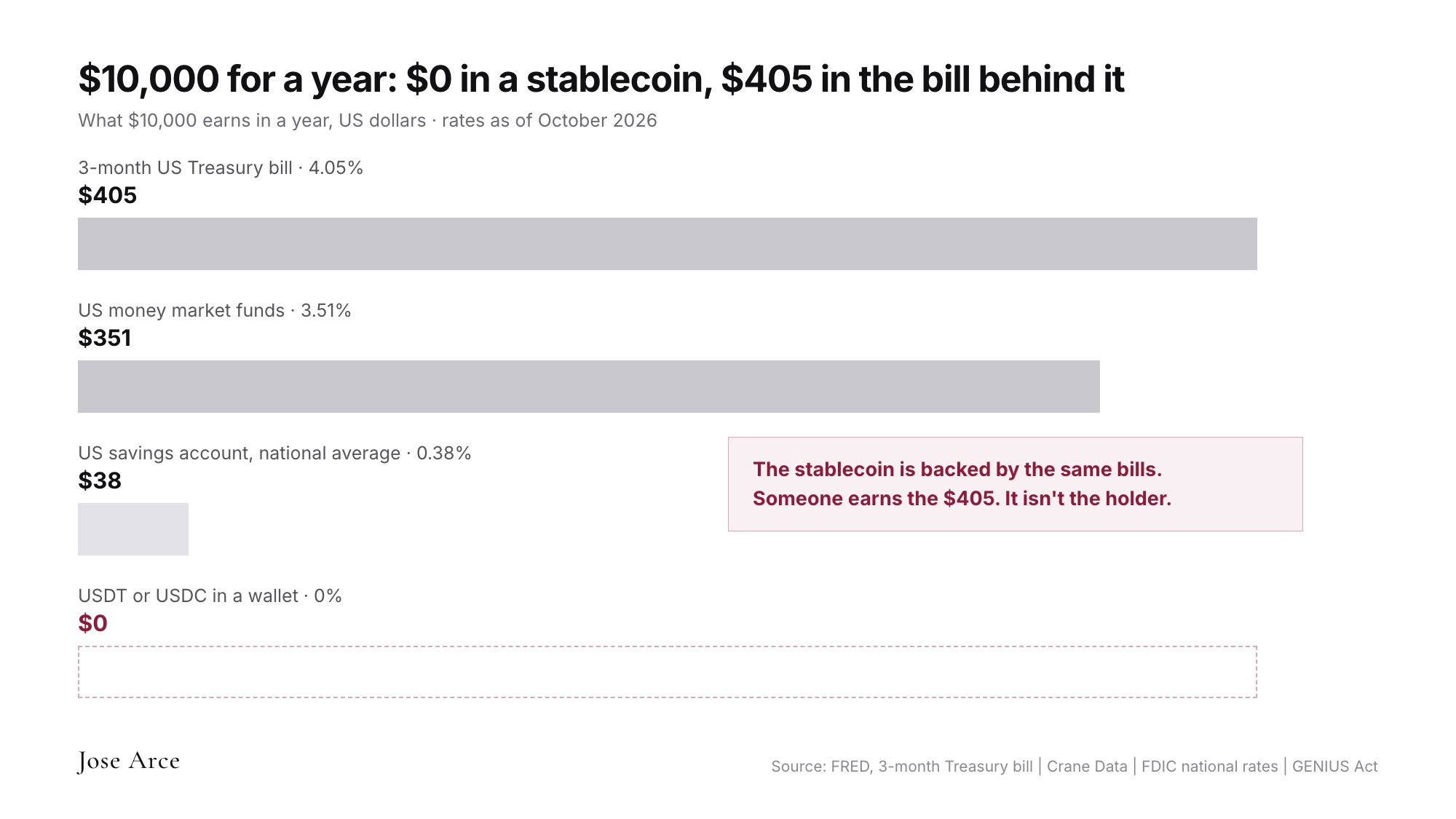
That's by design. A stablecoin is a claim on a reserve of Treasury bills, overnight loans backed by Treasuries and cash. The reserve earns interest. The coin pays none. In the US that is now the law: the GENIUS Act, signed in July 2025, bars issuers from paying holders any form of interest or yield. The ban takes effect in January 2027.
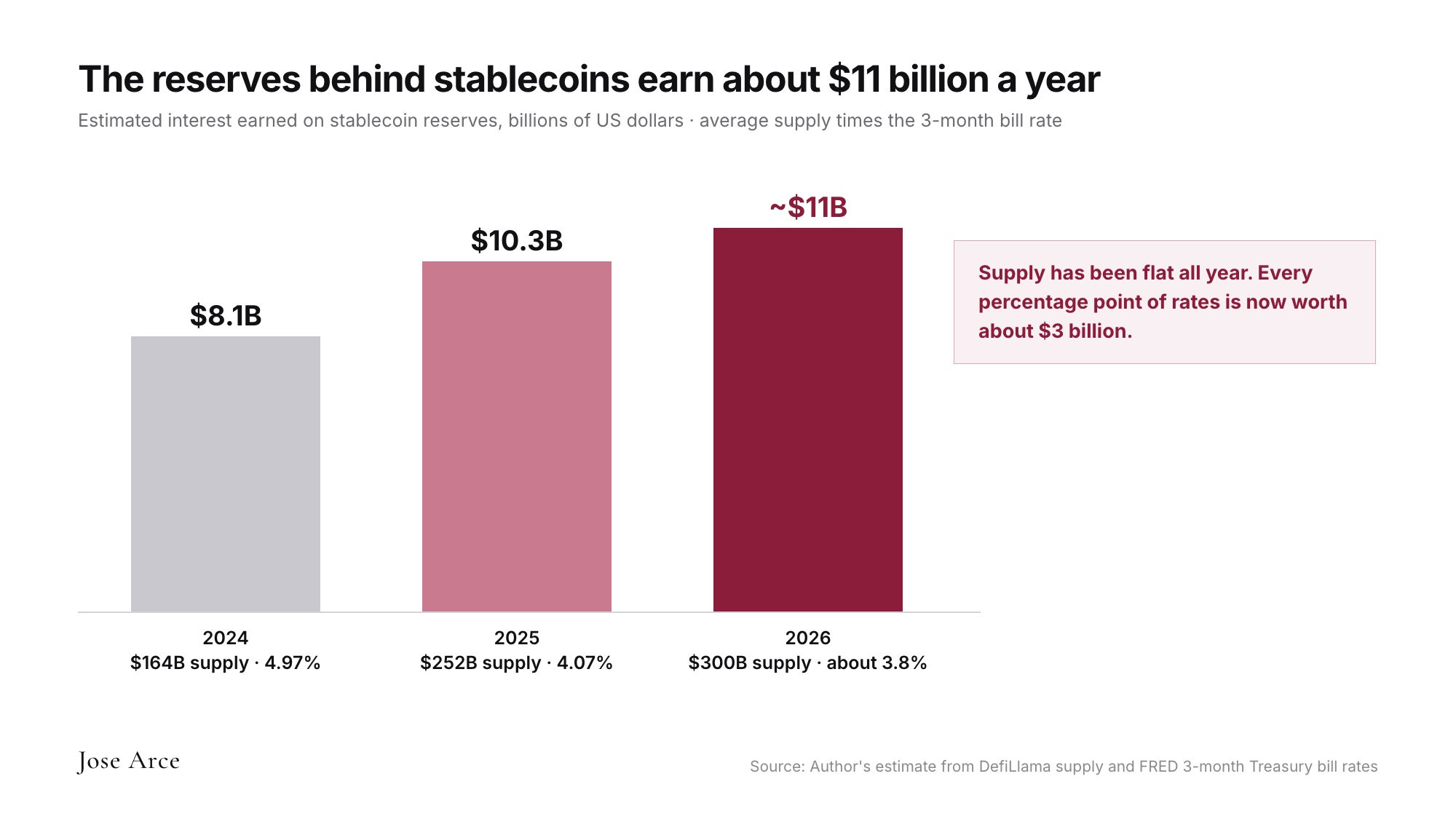
Across the market the numbers get large. With about $300 billion in circulation and short-term rates near 4%, the reserves behind stablecoins earn roughly $11 billion a year. That's up from about $8 billion in 2024. Supply has been flat all year, so the total now moves with interest rates. Each percentage point is worth about $3 billion.
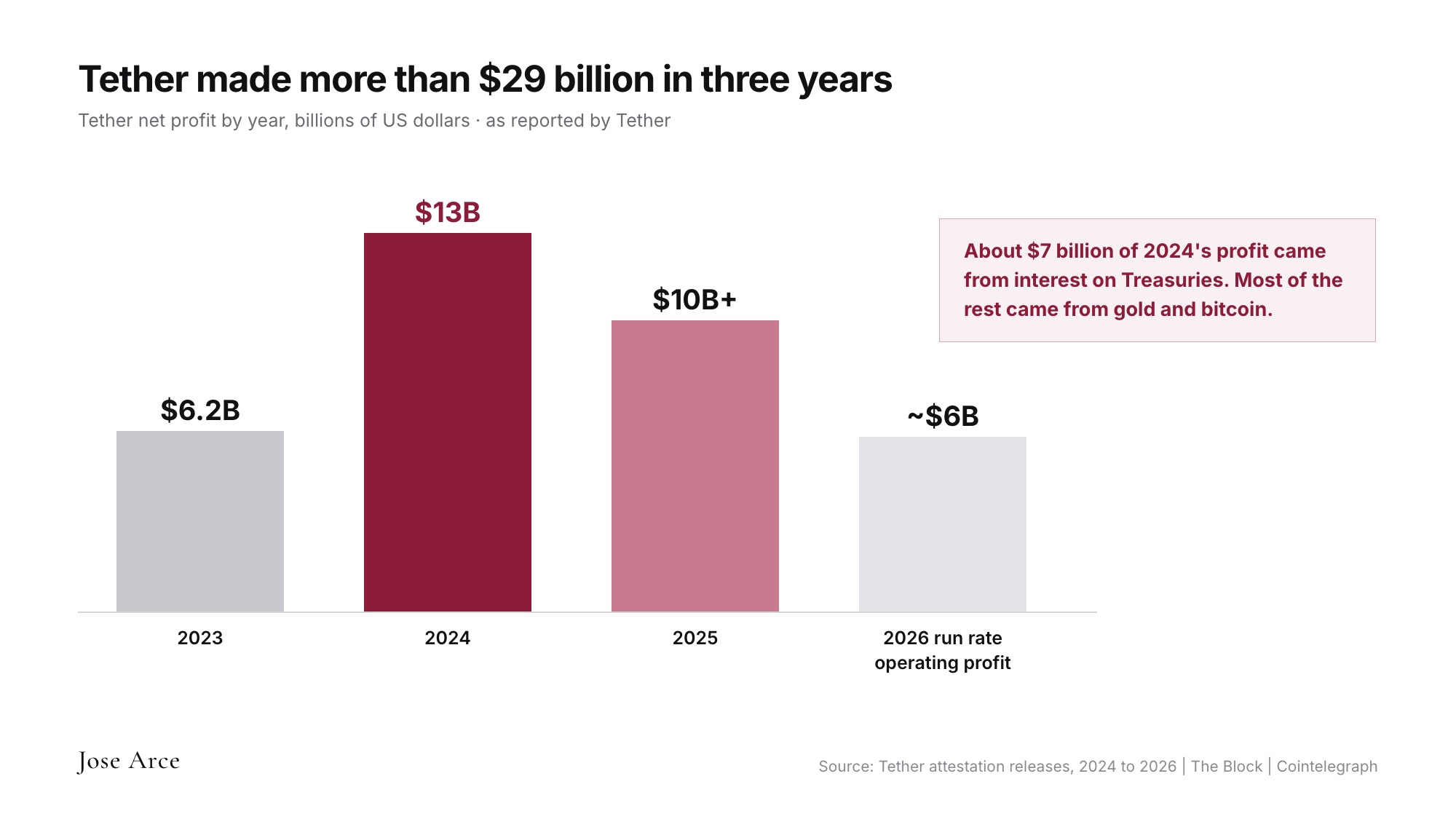
The largest share goes to Tether, which issues about 60% of all stablecoins and passes none of the interest on. Tether reported $6.2 billion of profit in 2023, about $13 billion in 2024 and more than $10 billion in 2025. In 2024, about $7 billion came from interest on Treasuries. Most of the rest came from gains on gold and bitcoin. This year it has reported $1.5 billion of operating profit a quarter. These are Tether's own reported figures. Its accounting firm, BDO, attests to the reserves each quarter.
What stands out isn't only the size of the profit. It's how small the team is. Fortune reported in January 2026 that Tether has fewer than 200 employees. On 2025's profit, that's more than $50 million per employee. Nvidia earns about $2.9 million per employee. Apple earns about $0.8 million. Microsoft, about $0.6 million.
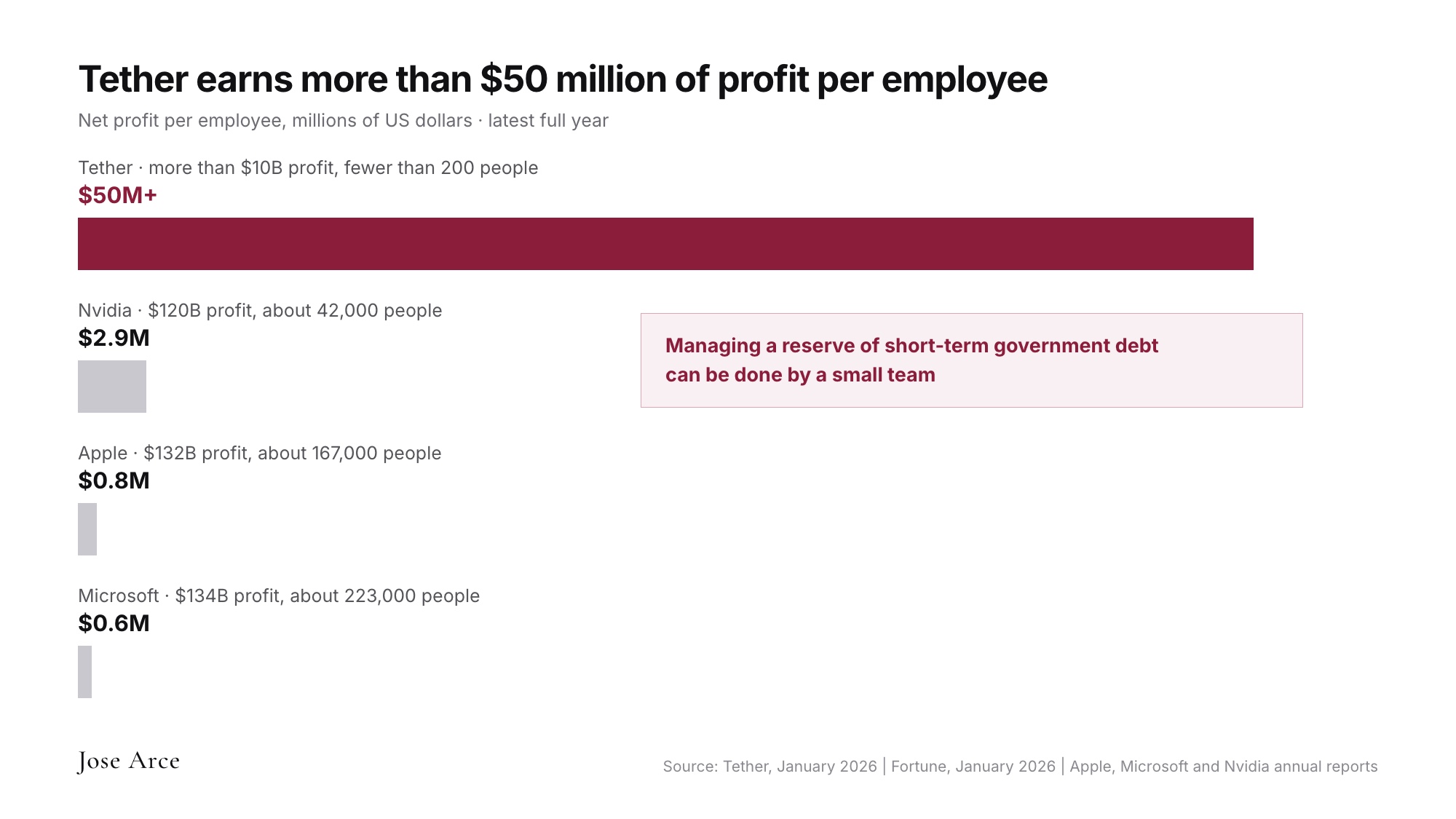
Managing a reserve of short-term government debt can be done by a small team. That's the shape of the business.
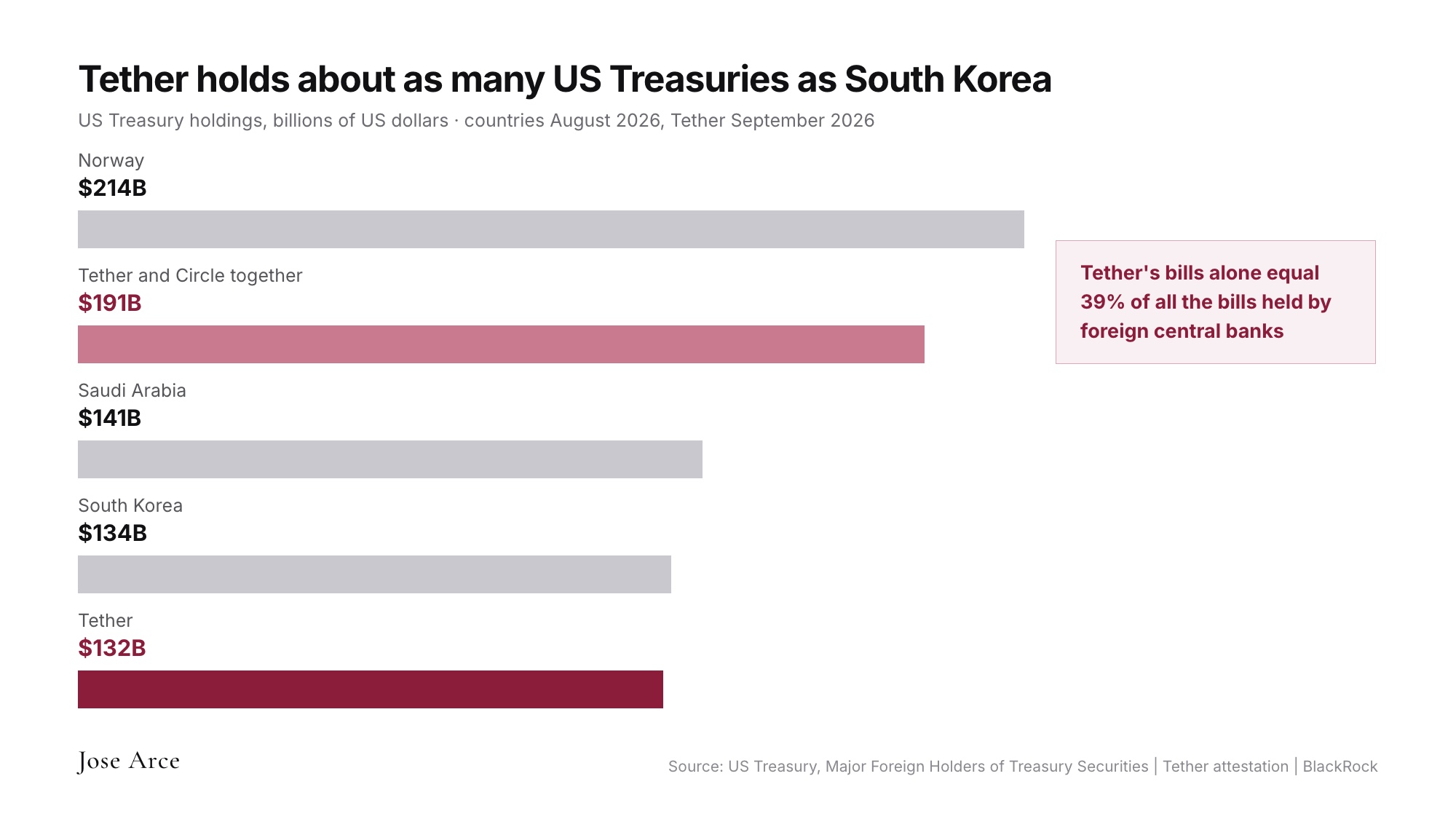
It also makes Tether one of the larger lenders to the US government. At the end of September it held $132.4 billion in Treasury bills and overnight repo. On the Treasury's list of foreign holders, that would rank 19th, just behind South Korea and ahead of the United Arab Emirates. Add Circle's reserve fund and the two together would rank 16th, between Norway and Brazil. Tether's bills alone equal about 39% of all the Treasury bills held by foreign central banks.
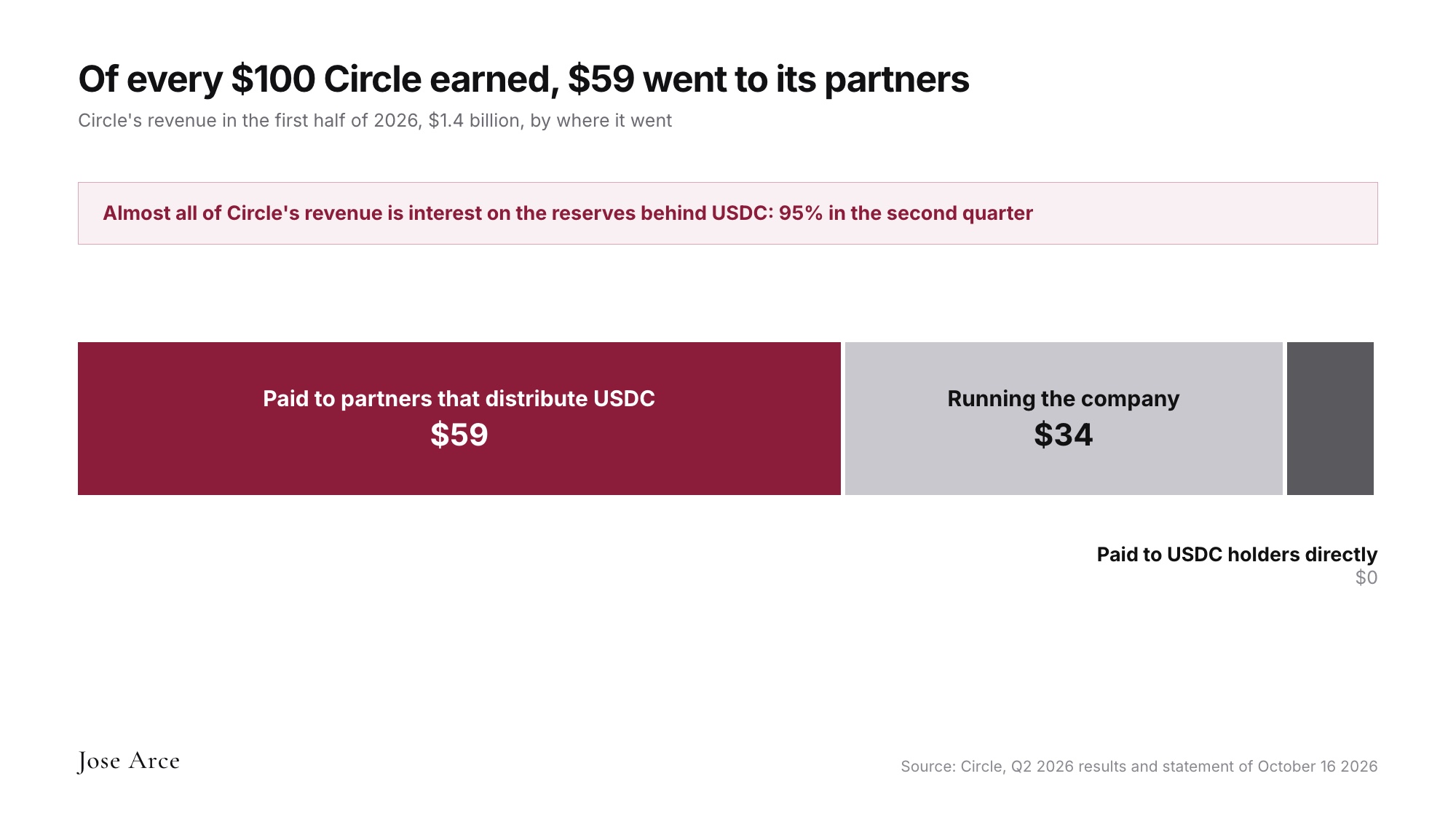
Circle, the second largest issuer, works differently. Almost all of its revenue is reserve interest, and most of it is paid to partners. In the first half of 2026, Circle earned about $1.4 billion. $819 million, or 59%, went to the partners that distribute USDC. $473 million ran the company. $103.5 million was profit. Holders received nothing directly. Circle's third quarter results, published November 4, show the same pattern: $658 million of reserve income and $412 million in distribution, transaction and other costs.
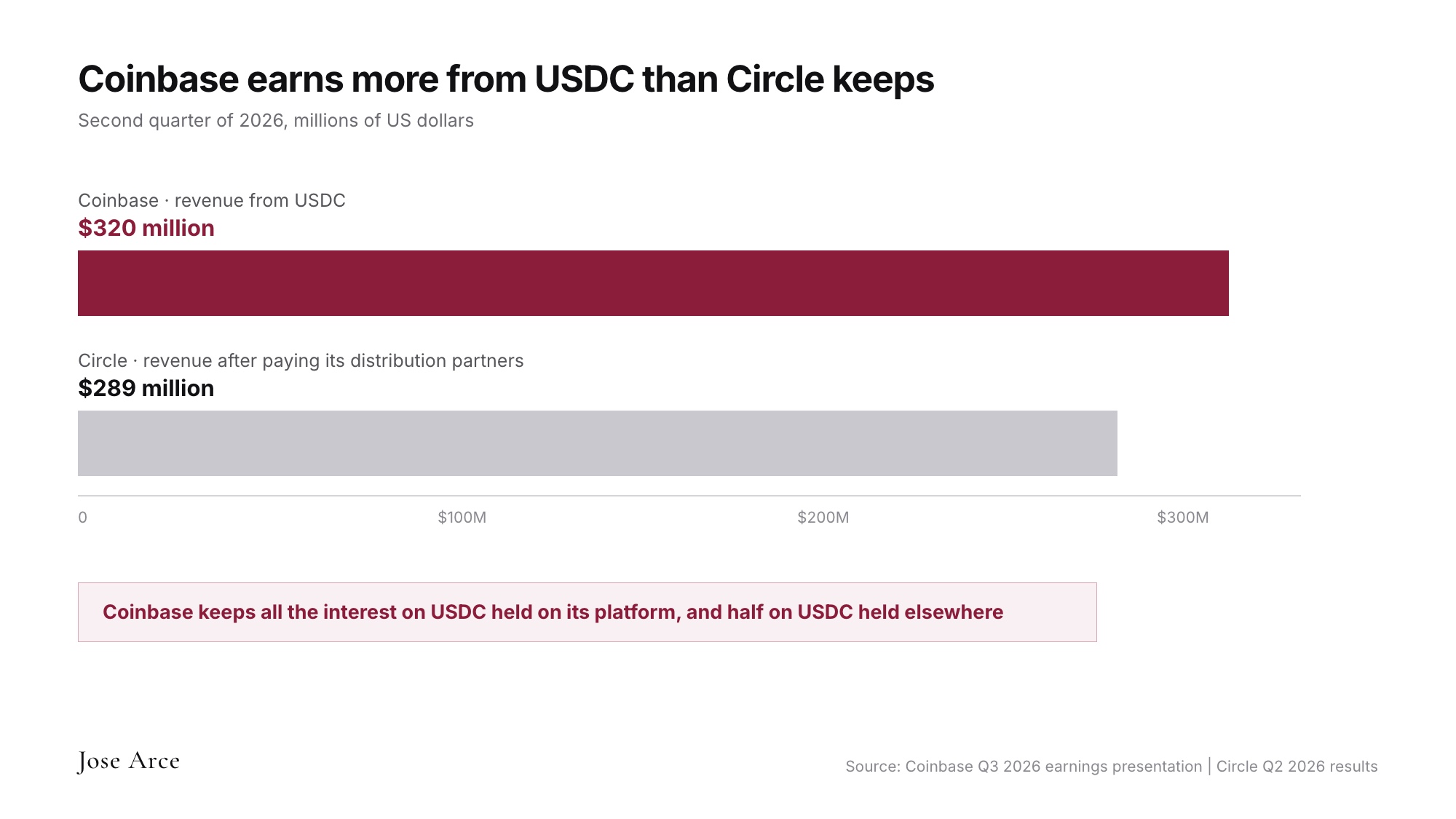
The biggest partner is Coinbase. Under their 2023 agreement, Coinbase keeps all the interest on USDC held on its platform and half of what's left on USDC held anywhere else. In the second quarter of 2026, Coinbase earned $320 million from USDC. Circle kept $289 million. In the third quarter, setting aside a one-time token sale, it was $328 million for Coinbase and about $271 million for Circle. The company that distributes the coin earns more from it than the company that issues it.
Some of that does reach people. Coinbase pays 3.75% on USDC to its paid members. PayPal pays about 4% on PYUSD balances that opt in. Kraken pays 4.25% to subscribers. In Argentina, Mexico and Brazil, apps pay 4% to 6%, mostly by lending the coins out, which carries its own risks. None of these companies disclose how much they pay in total.
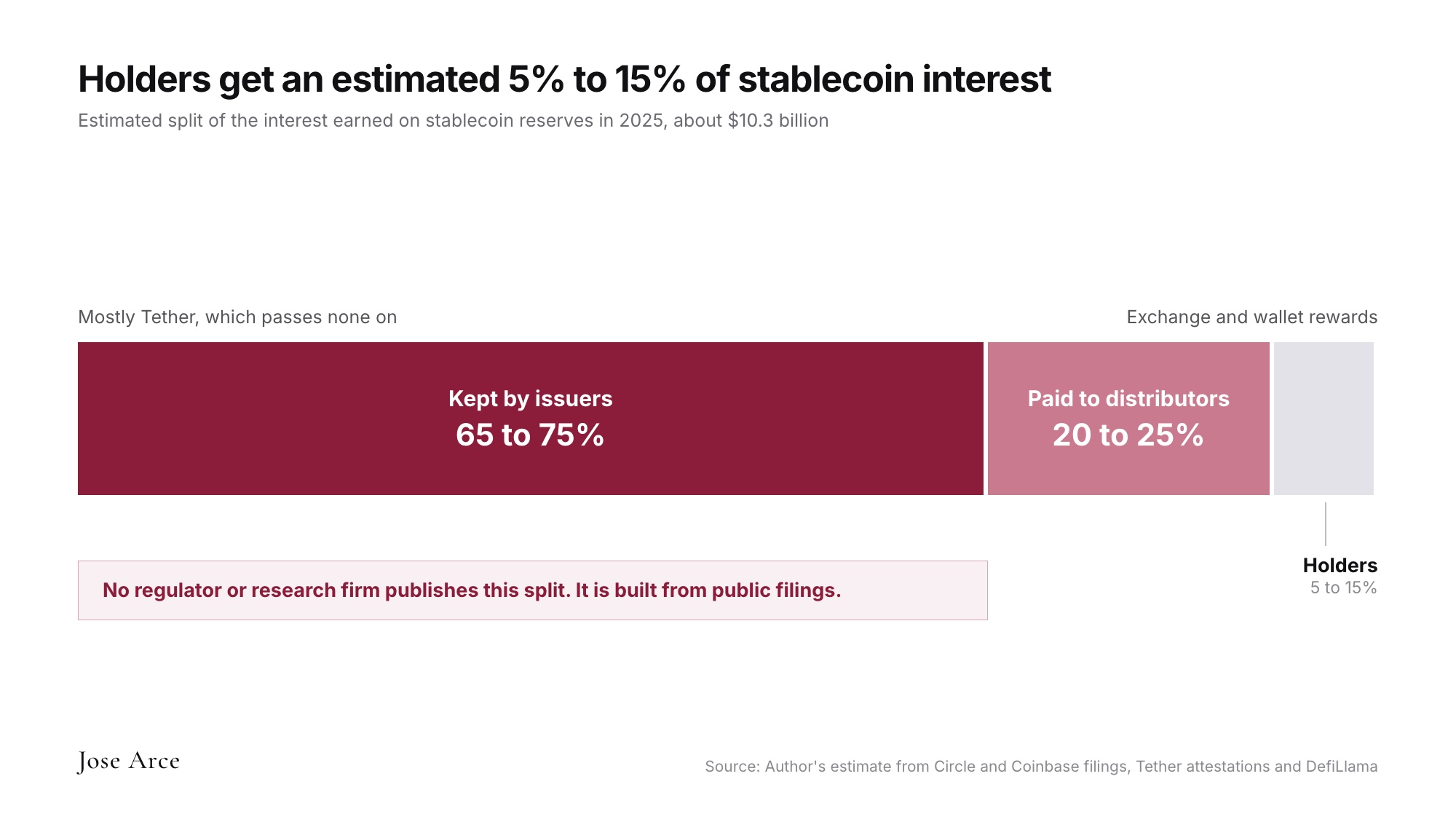
Put together, the split looks something like this. My estimate for 2025 is that issuers kept 65% to 75% of the interest, distributors took 20% to 25%, and holders received 5% to 15%. No regulator or research firm publishes this number. It's built from the filings above.
A gap between what money earns and what its owner receives isn't new in finance. The average US savings account pays 0.38% while Treasury bills pay about 4%. That spread pays for deposit insurance and for the loans banks make. A stablecoin is built differently. By law it can't be lent out, and it carries no deposit insurance. The interest pays for the system that issues and moves it.
Whether holders should get a share is now the main stablecoin fight in Washington. Coinbase and the White House argue that people should “earn money on their money.” Bank groups argue that interest on stablecoins could pull deposits from community banks that lend locally. The bill that would settle it, the CLARITY Act, fell short of the 60 Senate votes it needed in September. Europe has already decided: under its MiCA rules, neither issuers nor exchanges can pay interest on stablecoins.
For now the answer is simple. The people who hold digital dollars earn nothing on them. The companies that issue and distribute them earn about $11 billion a year. Whoever is first allowed to share that with holders will change why anyone holds a stablecoin at all.
I've put the full dataset and sources together. Happy to share it with anyone working on stablecoins.